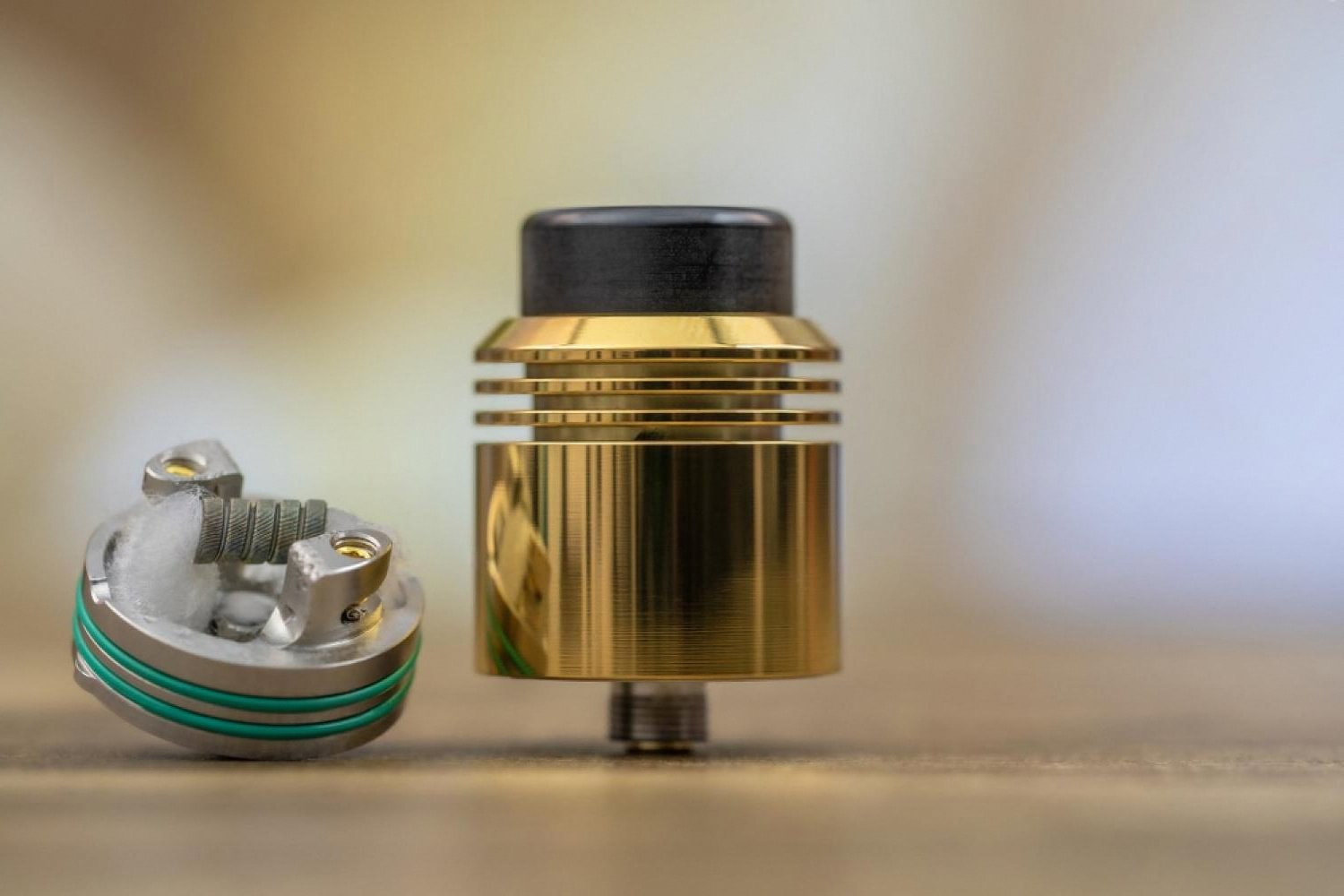
A premium vape device is not defined by a logo, a price tag or a marketing campaign. It is defined by the choices an engineering team makes at every stage of design: which alloy the chassis is machined from, how tightly the coil resistance holds under repeated firing, what the battery does when it detects a short circuit, and how airflow is shaped so vapour arrives smooth instead of hot and dry. In the UAE, where devices sit through 45 C summers, car interiors that push well past that, and the constant fine dust of a coastal desert climate, those decisions matter more than they do in cooler markets. This article walks through the engineering principles that separate genuine quality from a shiny shell, so you can read a spec sheet the way a designer reads it.
The goal is not to sell you a specific brand. It is to give you a framework: materials, coils, batteries, airflow and manufacturing. Once you understand what each part is meant to do, choosing between two devices on a shelf in Dubai becomes a lot less about packaging and a lot more about physics.
Section 1
Materials and build quality
The shell of a device does more than look good. It conducts heat away from the battery, resists corrosion from sweat and humidity, and holds tolerances tight enough that threaded parts do not loosen over months of daily use. Three material families dominate serious devices.
- Aluminium alloys (typically 6061 or 7075 aerospace grade) give a light chassis with good heat dissipation. 7075 is roughly twice as strong as 6061 but harder to machine, so its presence in a spec is a signal of intent.
- Stainless steel (usually 304 or 316L) shows up in threads, 510 connectors and coil decks. 316L in particular resists pitting from salty coastal air, which matters in Abu Dhabi and Sharjah as much as it does in Dubai Marina.
- High-grade plastics such as PCTG, PEI (Ultem) and food-contact PEEK are used for tanks, drip tips and internal insulators. Cheaper devices swap these for generic polycarbonate that yellows and cracks under heat.
- Build quality shows in the details: flush panel gaps under 0.2 mm, buttons with a defined click and no rattle, threads that turn smoothly without grit.
Section 2
Coil engineering and heat control
The coil is where liquid becomes vapour, and it is the single component that most affects taste, throat feel and how long a device stays enjoyable. Premium coils are engineered around four ideas.
- Mesh technology. A woven or perforated metal strip replaces the old round wire. The larger surface area heats liquid evenly instead of at a single hot spot, which cuts down on the burnt taste that plagued early sub-ohm tanks.
- Heat distribution. Kanthal, nichrome and stainless steel each have different resistance curves. A well-tuned coil pairs the alloy with a wick geometry that keeps the hottest zone saturated at all times.
- Longevity. Cheap coils gunk up in three or four days. Quality mesh with organic cotton or ceramic wicking often runs one to two weeks of moderate use before flavour drops off, according to independent teardown reviews.
- Consistency. The tenth puff should taste like the first. That requires resistance tolerances of a few percent, not the 15 to 20 percent seen in unbranded coils.
Section 3
Battery technology and safety
Lithium-ion cells store a lot of energy in a small space, which is exactly what makes them useful and exactly what makes them dangerous when built badly. A premium device treats the battery as a system, not a component.
- Capacity is quoted honestly, in mAh for the cell and Wh for total output. Inflated numbers are a red flag.
- Charging uses USB-C with a proper charge controller, typically 1A to 2A, and steps down current as the cell approaches full to protect cycle life. Standards like USB Power Delivery are increasingly common.
- Safety systems include short-circuit cutoff, over-discharge protection, reverse-polarity protection, over-temperature shutdown and a 10-second puff timer.
- Battery management chips (BMS) balance voltage on multi-cell devices, log fault states and often expose them through a small screen so the user knows why the device stopped firing.
Regulators like the IEC publish specific safety standards (IEC 62133 for portable cells) and reputable manufacturers test to them. If a spec sheet does not mention any standard at all, that is information in itself. This is one of the reasons UAE buyers gravitate towards safe vapes sold through licensed local retailers rather than grey-market imports.
Section 4
Airflow engineering
Airflow is the least glamorous part of a device and the part that separates a pleasant draw from a wheezing one. Engineers tune three variables against each other.
- Draw resistance. Measured in inches of water column or simply by how much effort a puff takes. Mouth-to-lung devices target higher resistance to mimic a cigarette; direct-lung devices open the channels wide.
- Vapour consistency. Air should hit the coil in a laminar flow, not a turbulent one. Rounded intake channels and stepped chambers keep the vapour dense from first puff to last.
- Leak prevention. A well-designed airflow path uses pressure differentials so liquid stays in the wick instead of pooling in the mouthpiece. Silicone gaskets rated to at least 200 C keep seals intact in a hot car.
Manufacturing standards separate a prototype from a product
A clever design on a lab bench is not the same as a million units coming off a line with identical behaviour. The bridge between the two is manufacturing discipline.
- Precision manufacturing. CNC machining to tolerances of ±0.05 mm, not the ±0.3 mm typical of budget production. Threads that always align, pods that always click, chassis that always sit flush.
- Quality control. Statistical sampling on every batch, plus 100 percent electrical testing of the finished device. ISO 9001 certification is a minimum baseline for reputable factories.
- Reliability testing. Drop tests, thermal cycling from -10 C to 60 C, salt spray for coastal markets, and accelerated life testing that simulates six months of use in a few weeks.
The premium checklist at a glance
1. Materials
Named alloys, food-grade plastics, tight panel gaps.
2. Coil
Mesh construction, consistent resistance, longer service life.
3. Battery
Multiple protection layers, honest capacity, USB-C charging.
4. Airflow
Tuned draw, smooth vapour, sealed against leaks.
Reference: what to look for on the spec sheet
| Category | Premium signal | Budget signal |
|---|---|---|
| Chassis material | 6061 / 7075 aluminium, 316L stainless | “Zinc alloy” or unspecified |
| Coil | Mesh, resistance tolerance ±3% | Round wire, no tolerance quoted |
| Battery cell | Branded cell (Samsung, LG, Sony), Wh rated | Unbranded, mAh only |
| Protections | Short, over-discharge, over-temp, timer | One or none listed |
| Charging | USB-C, current-limited, cycle count >300 | Micro-USB, no charge profile info |
| Certification | CE, RoHS, IEC 62133, ISO 9001 factory | None mentioned |
Consumer testing organisations such as Which? have repeatedly shown that devices meeting the left column outlast and outperform those on the right, often by a factor of three or more in real-world use.
Frequently asked questions
Is a heavier vape device automatically better built?
Weight is a weak proxy for quality. A well-machined aluminium device can feel lighter than a cheap zinc-alloy one and still be far stronger. What matters is the named alloy, the tolerance of the panels and threads, and whether buttons feel positive without rattle. Trust the material spec, not the heft in your hand.
How can I tell if the battery in a device is safe?
Look for three things: a named cell manufacturer (Samsung, LG, Sony, Murata), a listed set of protections (short circuit, over-discharge, over-temperature, puff timer) and a stated certification such as IEC 62133 or CE marking.
Devices sold through licensed UAE retailers generally have to meet these baseline standards, whereas devices bought from unregulated sources often skip them entirely.
Do mesh coils really last longer than traditional coils?
Yes, in most real-world use. A mesh coil spreads heat across a larger surface, which means each part of the wick runs cooler and gunks up more slowly. Well-made mesh coils typically last one to two weeks of moderate use, while round-wire coils often need replacing after three or four days.
The exception is very sweet or dark liquids, which will coat any coil quickly regardless of geometry.
Why does draw resistance matter?
Draw resistance shapes how the device feels and how the vapour tastes. A tight mouth-to-lung draw mimics a cigarette and works well with higher-nicotine liquids. A loose direct-lung draw produces bigger clouds and pairs with lower nicotine strengths. Neither is objectively better, but a premium device tunes airflow so the resistance stays consistent from a full tank to an almost empty one.
Does UAE climate really damage vape devices?
It can. Interior car temperatures in a Dubai summer routinely exceed 70 C, which is enough to soften cheap plastics, degrade seals and stress lithium cells. Coastal humidity accelerates corrosion on unprotected steel and copper contacts. A device built with 316L stainless, silicone gaskets rated above 200 C and a chassis of proper aluminium alloy will tolerate these conditions far better than a generic unit.
Is ISO 9001 certification something I should actually care about?
ISO 9001 is a factory-level quality management standard, not a product safety mark, but it is a useful signal. A factory certified to ISO 9001 has documented processes for defect tracking, batch testing and corrective action. Combined with product-level certifications like CE, RoHS and IEC 62133, it is a reasonable indicator that the manufacturer takes consistency seriously.
How much should I expect to pay for a genuinely premium device in the UAE?
Prices vary with features, but a well-engineered refillable pod system typically sits above the entry-level tier, and a full mod with proper cells, screen and protections above that. Trying to buy a “premium” device at disposable-vape prices almost always means one of the categories above (materials, coil, battery, airflow or QC) has been quietly downgraded to hit the price point.